What every woman in Pakistan needs to know about bone health — before it becomes a problem
Bone health is one of those things most women in Pakistan don’t think about until something goes wrong. A fracture from a minor fall. Persistent back pain. A stoop that develops gradually with age. By the time these signs appear, the problem has typically been building for decades — quietly, without any obvious warning.
The numbers tell a striking story. According to published research, 51% of women in Pakistan suffer from calcium deficiency. Furthermore, 55% of women aged 45 to 54 are already predisposed to osteoporosis — and that figure rises to 97% in women between 75 and 84. These are not statistics from a rare disease. This is the reality of bone health for a majority of Pakistani women across every age group.
Understanding why this happens, and more importantly what can be done about it, is what this guide is for. We’ll cover how calcium works in the body, why Pakistani women are particularly vulnerable, what to look for in a calcium supplement, and how to choose the right one for your specific situation.
Why Calcium Matters More Than Most People Think
Most people associate calcium with bones, and while that’s accurate — 99% of the body’s calcium is stored in bones and teeth — it doesn’t fully capture how essential this mineral is. In addition to maintaining bone density and strength, calcium plays a direct role in muscle contractions, including the heartbeat. It also supports nerve signal transmission, blood clotting, and a range of hormonal processes.
When dietary calcium is consistently low, the body doesn’t simply go without. Instead, it draws calcium from the bones to maintain normal blood calcium levels for these essential functions. Over time, this process quietly reduces bone mineral density — a condition known as osteopenia, which can progress to osteoporosis if left unaddressed.
This is why osteoporosis is often called the “silent thief.” There are no symptoms while bone density is being lost. By the time a fracture occurs or a woman notices she is losing height, a significant amount of bone mass has already been depleted — often over many years.
Why Pakistani Women Are Especially at Risk
Several interconnected factors make calcium deficiency and osteoporosis disproportionately common among women in Pakistan. Understanding these factors is the first step toward addressing them.
Dietary Calcium Is Consistently Low
Research conducted among postmenopausal women in Pakistan found that the mean daily calcium intake was just 346 mg — less than half the recommended daily intake of 1,000 to 1,200 mg. Dairy products like milk and yogurt are the most concentrated sources of dietary calcium, but actual consumption is often lower than assumed, particularly in households where tea with a small amount of milk replaces a proper serving of dairy.
Vitamin D Deficiency Compounds the Problem
Calcium cannot be properly absorbed without Vitamin D. However, Vitamin D deficiency is widespread across Pakistan — a paradox given how much sunlight the country receives. The reason is largely cultural and practical: most women spend the majority of their time indoors, and when outdoors, clothing covers most of the skin. As a result, even when calcium intake is adequate, absorption can remain poor without sufficient Vitamin D alongside it.
Menopause Accelerates Bone Loss
Estrogen plays a protective role in bone health by slowing the rate at which bone is broken down. After menopause, estrogen levels drop sharply — and with them, this protection disappears. Pakistani women, on average, enter menopause slightly earlier than women in Western countries, and the transition tends to be more abrupt. Consequently, bone loss in the postmenopausal years can be rapid if calcium and Vitamin D levels are not actively supported.
Multiple Pregnancies Deplete Reserves
During pregnancy and breastfeeding, calcium demands increase significantly. A baby’s developing skeleton draws heavily on the mother’s calcium stores. When multiple pregnancies follow one another closely — which is common in Pakistan — there is often insufficient time between them for maternal bone density to recover fully. Over multiple pregnancies, cumulative depletion can be substantial.
Calcium-Rich Foods Are Not Always Accessible
Beyond dietary habits, affordability and availability also play a role. Fresh dairy, leafy greens, and fish with soft bones are not equally accessible across all socioeconomic levels and regions. In many households, the nutritional focus is on meeting caloric needs, leaving micronutrient intake — including calcium — chronically short.
Recognizing the Symptoms of Calcium Deficiency
Because calcium deficiency develops gradually, the early signs are often attributed to other causes. Nevertheless, certain patterns are worth paying attention to:
- Muscle cramps, particularly in the legs at night — one of the earliest and most common indicators of low calcium
- Tingling or numbness in the hands, feet, and around the mouth — a sign of disrupted nerve signaling
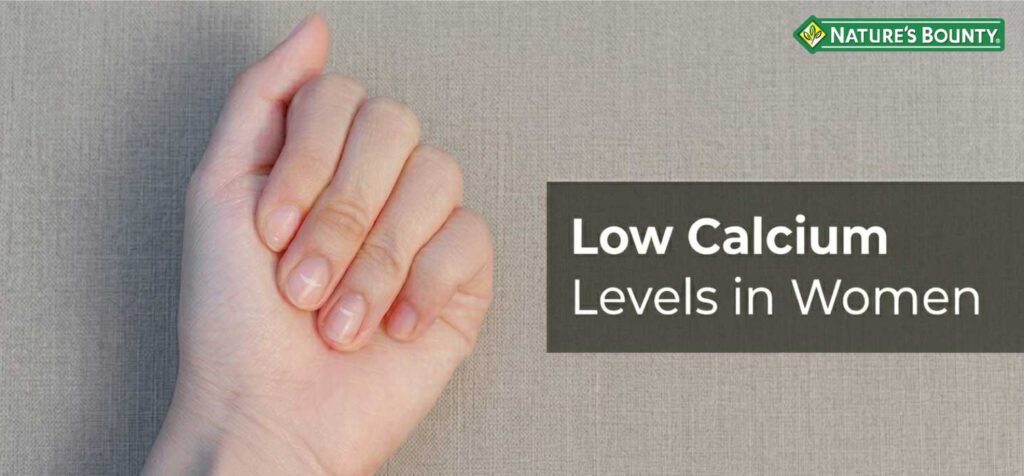
- Brittle nails that break easily — calcium is also important for nail structure
- Persistent back pain or joint discomfort, especially in women over 40
- Dental problems — teeth are calcium-dense, and chronic deficiency can affect dental health over time
- Fatigue and general weakness that doesn’t improve with rest
In more advanced cases, calcium deficiency contributes to osteoporosis, which can lead to vertebral compression, loss of height, a curved spine, and a significantly increased risk of fractures from minor impacts that healthy bones would easily absorb.
How to Choose the Right Calcium Supplement
Not all calcium supplements are equal. In fact, the differences between products can significantly affect how well they work. Here are the key factors to evaluate before choosing one.
Calcium Carbonate vs Calcium Citrate — Which Form Is Better?
These are the two most common forms of calcium in supplements, and they work differently. Calcium carbonate is the most widely available form. It contains a higher percentage of elemental calcium and is generally well absorbed — but only when taken with food, because stomach acid is needed to break it down. On the other hand, calcium citrate can be taken with or without food and is more easily absorbed by people with lower stomach acid, which becomes more common with age.
For most women under 50 who take their supplement with meals, calcium carbonate is effective and economical. For women over 50, or those taking medications that reduce stomach acid, calcium citrate is the more reliable choice.
The Role of Vitamin D3 — Never Take Calcium Without It
As noted earlier, calcium absorption depends on Vitamin D. Therefore, choosing a supplement that combines Calcium with Vitamin D3 — rather than taking them separately — ensures that the two work together as intended. Vitamin D3 is the more bioavailable form of Vitamin D and is consistently preferred over D2 in well-formulated supplements.
Elemental Calcium — Check the Actual Amount
The total weight listed on a calcium supplement label is not the same as the amount of elemental calcium you’re getting. For example, a tablet labeled “Calcium Carbonate 1500mg” may only provide around 600mg of elemental calcium. Always check the “elemental calcium” figure on the label — that is what your body actually absorbs and uses.
Pack Size and Value
Calcium supplementation is not a short-term commitment. It needs to be taken consistently over months and years to meaningfully support bone health. As a result, choosing a supplement that offers a larger pack size reduces the cost per day and — equally important — reduces the inconvenience of frequent restocking. This is where imported brands often have a clear advantage over local brands that typically come in smaller packs of 30 to 60 tablets.
Nature’s Bounty Calcium Range — Options for Every Stage
Nature’s Bounty offers two calcium supplements in Pakistan, both available at ImportedVitamins.com with Cash on Delivery. Each is designed with specific considerations in mind:
| Product | Calcium | Vitamin D3 | Pack Size | Supply | Price (Rs.) | Best For |
| Calcium 600 + D3 | 600mg elemental | 800 IU D3 | 250 tablets | 125 days | 6,296 | Daily maintenance, best value, long supply |
| Calcium 600 + D3 | 600mg elemental | 800 IU D3 | 60 tablets | 30 days | 2,876 | First-time buyers, trying before committing |
Both products deliver 600mg of elemental calcium per serving — a meaningful and well-researched dose — alongside 800 IU of Vitamin D3 to ensure proper absorption. The 250-tablet pack works out to approximately Rs. 50 per day and provides over four months of uninterrupted supplementation in a single purchase. That consistency is precisely what bone health requires.
In comparison, local brands typically offer calcium supplements in 30 to 60-tablet packs. While the upfront cost is lower, the per-day cost and the frequency of repurchasing often make them less economical and harder to maintain consistently over time. Additionally, the elemental calcium content and Vitamin D3 formulation in local brands can vary significantly between products.
Nature’s Bounty has been manufacturing supplements in FDA-regulated facilities in the United States since 1971. Every batch undergoes laboratory testing for purity and potency, ensuring that what is printed on the label is what each tablet actually contains.
How and When to Take Calcium Supplements
Taking calcium correctly matters as much as choosing the right product. Here are the key practical points:
- Take with food: Calcium carbonate requires stomach acid to be absorbed properly. Taking it with a meal ensures the acid is present and absorption is maximized.
- Split your dose: The body absorbs calcium most efficiently in amounts of 500mg or less at a time. If your daily requirement is 1,000mg, taking two servings several hours apart is more effective than taking both at once.
- Avoid taking with iron: Calcium and iron compete for absorption. If you are also taking an iron supplement — which is common among Pakistani women — take the two supplements at least two hours apart.
- Be consistent: Bone health is built over years, not weeks. The benefit of calcium supplementation comes from sustained daily intake, not occasional use. Missing days regularly undermines the long-term effect.
- Don’t exceed recommended amounts: More is not better with calcium. Excessive intake — above 2,500mg daily from all sources combined — has been associated with kidney stones in some individuals. Stick to the recommended dose on the label.
Frequently Asked Questions
At what age should Pakistani women start taking calcium supplements?
Ideally, bone-building is most effective in the twenties and early thirties, when peak bone mass is still being established. However, supplementation is beneficial at any age. Women in their late thirties and forties should consider starting before menopause, when bone loss begins to accelerate. Women who are postmenopausal should treat calcium supplementation as an ongoing health priority rather than an optional measure.
Can I get enough calcium from food alone?
Theoretically, yes — but practically, for most women in Pakistan, the answer is no. Given that research shows average dietary calcium intake in Pakistani women is less than half the recommended amount, supplementation is the most reliable way to close that gap consistently. Food remains important, but a supplement ensures the baseline is covered regardless of day-to-day dietary variation.
Do calcium supplements cause kidney stones?
This concern is commonly raised, and it is worth addressing directly. Calcium supplements taken with food do not increase kidney stone risk for most people. In fact, dietary calcium can reduce certain types of kidney stones by binding with oxalate in the gut before it reaches the kidneys. The risk is associated with taking very high doses of supplemental calcium between meals. Sticking to recommended doses and taking the supplement with food is the practical solution.
Should I take Vitamin D separately or look for a combined supplement?
A combined Calcium + Vitamin D3 supplement, like Nature’s Bounty Calcium 600 + D3, is simpler and ensures that both nutrients are present every time. If you are separately managing a significant Vitamin D deficiency, your doctor may recommend an additional higher-dose D3 supplement alongside. In most cases, however, a combined product covers the daily requirement effectively.
Final Word
Bone health is not something that announces itself until it becomes a problem. For women in Pakistan, the combination of low dietary calcium, widespread Vitamin D deficiency, multiple pregnancies, and the bone loss that follows menopause creates a very real and very widespread risk — one that often goes unaddressed simply because it’s invisible until a fracture or diagnosis makes it impossible to ignore.
The good news is that it’s preventable, and supplementation is one of the most straightforward ways to take control. Choosing a well-formulated Calcium + Vitamin D3 supplement, taking it consistently with food, and starting before bone loss becomes advanced are the three most impactful steps any woman can take for her long-term bone health.
Nature’s Bounty Calcium 600 + D3 is available at https://importedvitamins.com/ in both 60-tablet and 250-tablet packs, with Cash on Delivery across Pakistan and free shipping. Manufactured in FDA-regulated facilities in the United States and laboratory tested for purity — quality that is consistent in every tablet, every batch.