Three of the most deficient minerals in Pakistan, and how they work together in ways most people don’t realize
If you’ve been feeling persistently tired, dealing with muscle cramps that wake you up at night, getting sick more often than you should, or noticing that your nails break far too easily, there’s a reasonable chance that three specific minerals are involved: calcium, magnesium, and zinc. Not because they’re rare or exotic, but because deficiencies in all three are remarkably common in Pakistan, and because the symptoms they cause are so easy to attribute to everything else.
What makes this trio particularly important is how closely connected they are. They don’t just work independently; they interact with one another in ways that mean a deficiency in one often worsens the impact of the others. Understanding this relationship and addressing all three together is considerably more effective than targeting them in isolation.
This guide covers what each mineral does, why Pakistanis are so commonly deficient, what the symptoms look like, and how to choose a supplement that addresses all three without the complexity of managing multiple products separately.
The Scale of the Problem in Pakistan
Before getting into how these minerals work, it is worth understanding just how widespread these deficiencies are, because the numbers are striking.
According to Pakistan’s National Nutrition Survey 2018, approximately 22% of women of reproductive age are zinc-deficient nationwide. In rural areas, that figure rises to 24.3%, while in urban settings it sits at 18.7%. A study conducted in rural Peshawar found even higher numbers, 27.8% of women of childbearing age were zinc deficient, with severe zinc deficiency found in 74.2% of pregnant women in their second and third trimesters.
On the magnesium side, research suggests that approximately 60 to 65% of Pakistani adults have some degree of magnesium deficiency. A typical Pakistani diet is estimated to provide only 180 to 220mg of magnesium per day, far below the recommended 320 to 420mg for adults. Furthermore, Pakistan’s agricultural soils have experienced significant mineral depletion over the past three decades, meaning the food itself contains less magnesium than it once did.
As for calcium, the National Nutrition Survey found that 26.5% of women of reproductive age were hypocalcaemic. Other studies have consistently shown that average dietary calcium intake among Pakistani women is less than half the recommended daily amount. Taken together, these three deficiencies represent a broad and largely unaddressed public health challenge.
What Each Mineral Does, and Why They Work as a Team
Calcium, More Than Just Bones
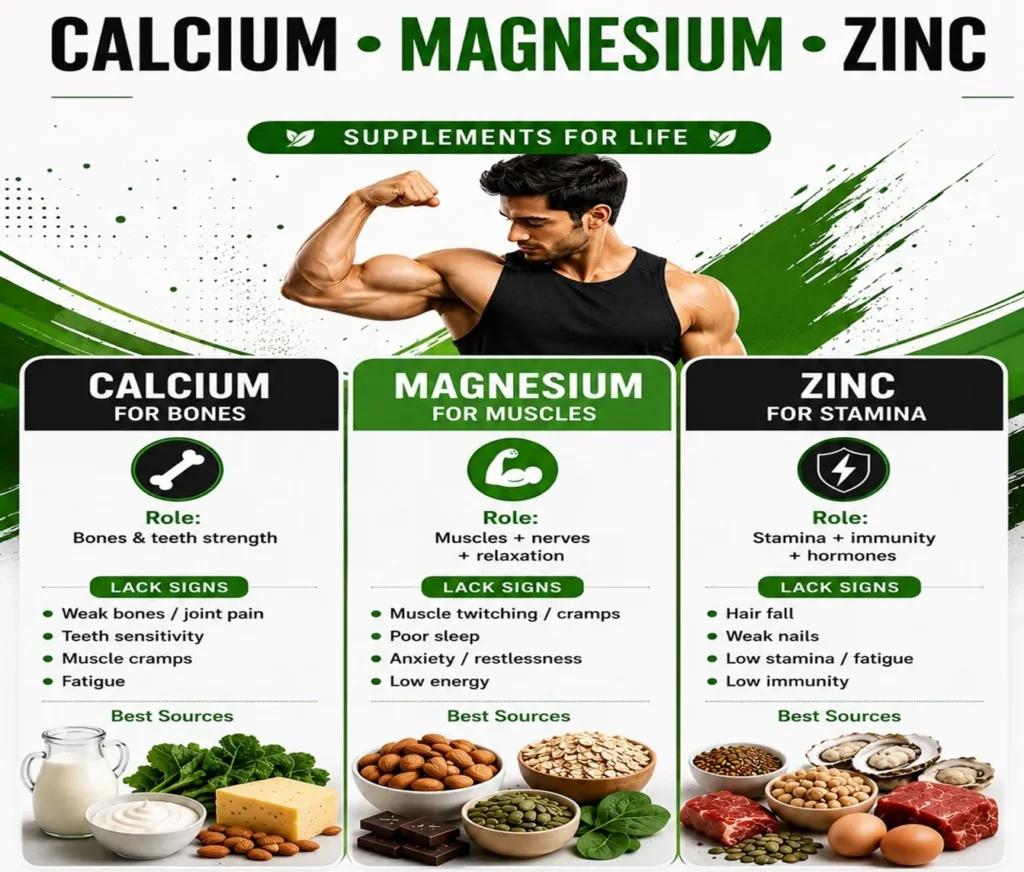
Most people know that calcium builds and maintains bones and teeth, where 99% of the body’s calcium supply is stored. However, less commonly understood is that calcium also plays an essential role in muscle contraction, including the heartbeat, nerve signal transmission, blood clotting, and hormone secretion. When dietary calcium is insufficient, the body draws from bone stores to maintain these critical functions, quietly reducing bone density over time.
Magnesium, The Mineral Everything Depends On
Magnesium is involved in over 300 enzymatic reactions in the human body. It regulates blood pressure, supports muscle and nerve function, controls blood sugar levels, and is essential for the synthesis of protein, bone, and DNA. Crucially, magnesium activates Vitamin D, meaning that without sufficient magnesium, Vitamin D supplements cannot be properly metabolized, regardless of the dose taken. Given how widespread Vitamin D deficiency already is in Pakistan, this relationship is particularly important.
In addition to these functions, magnesium has a well-documented role in sleep quality and stress regulation. It activates the parasympathetic nervous system, the part responsible for rest and calm, which is why low magnesium is so consistently associated with poor sleep, anxiety, and chronic fatigue.
Zinc, Immunity, Skin, and Hormonal Balance
Zinc is involved in immune function, wound healing, protein synthesis, cell division, and the regulation of taste and smell. It is also essential for hormonal balance, reproductive health, and the maintenance of healthy skin and hair. Because the body has no dedicated zinc storage system, a consistent daily intake is required. Even mild zinc deficiency can result in increased susceptibility to infections, delayed wound healing, skin problems, and, particularly relevant for Pakistani women, disrupted hormonal function during pregnancy.
How the Three Interact
These three minerals do not simply coexist, they actively influence each other’s absorption and function. Calcium and magnesium compete for absorption in the gut, which is why the ratio between them matters. Magnesium, as noted, is required to activate Vitamin D, which in turn governs how well calcium is absorbed. Meanwhile, zinc supports the production of hormones that regulate bone metabolism. Addressing all three together, in appropriate ratios, produces better outcomes than taking any one of them independently.
Why Pakistani Diets Consistently Fall Short
Several factors specific to Pakistan’s food environment make these deficiencies so prevalent:
- Phytate-rich staple foods: Wheat, lentils, and rice, the backbone of most Pakistani diets, contain phytic acid, which binds to zinc, calcium, and magnesium in the gut and significantly reduces their absorption. Ironically, the foods that make up the largest proportion of the diet are the same ones that block absorption of the minerals within them.
- Soil depletion: Pakistan’s agricultural lands have become increasingly depleted of minerals over the past three decades. Studies by the Pakistan Agricultural Research Council indicate that magnesium levels in commonly grown crops have declined by 25 to 40% since 1990. As a result, even when people eat vegetables and grains, those foods contain fewer minerals than the same foods did a generation ago.
- Limited dairy, meat, and seafood intake: Calcium, zinc, and magnesium are most bioavailable from animal sources, dairy, red meat, shellfish, and fish. Budget constraints, cooking habits, and cultural factors mean that these foods are not consumed consistently or in sufficient quantities by a large proportion of the population.
- High-stress lifestyles: Chronic stress rapidly depletes magnesium in particular, as the body excretes more of it through urine during periods of stress. Given the economic pressures, family responsibilities, and urban lifestyle stressors that most Pakistani adults navigate daily, magnesium loss is ongoing and difficult to replace through diet alone.
- Climate and sweating: Pakistan’s hot climate and humidity cause significant mineral loss through perspiration, particularly magnesium and zinc. During summer months, this loss accelerates, creating a seasonal pattern of depletion that is rarely compensated for.
Recognizing the Symptoms
Because these three minerals affect so many systems simultaneously, their deficiency symptoms overlap and are frequently attributed to other causes. Nevertheless, certain patterns are worth recognizing:
| Symptom | Most Likely Mineral Involved | Often Mistaken For |
| Muscle cramps, especially at night | Magnesium, Calcium | Dehydration, overexertion |
| Persistent fatigue despite sleep | Magnesium, Zinc | Anaemia, thyroid issues, stress |
| Frequent colds and infections | Zinc | Seasonal illness, low immunity |
| Poor sleep quality / anxiety | Magnesium | Stress, overthinking |
| Brittle nails and hair loss | Zinc, Calcium | Hormonal issues, aging |
| Slow wound healing | Zinc | Diabetes, circulation problems |
| Bone pain or joint discomfort | Calcium, Magnesium | Arthritis, vitamin D deficiency |
| Tingling or numbness in limbs | Calcium, Magnesium | Poor circulation, B12 deficiency |
| Low mood, irritability | Magnesium, Zinc | Depression, situational stress |
| Loss of taste or smell | Zinc | Viral infection, aging |
The overlapping nature of these symptoms is precisely why addressing all three minerals together, rather than chasing individual deficiencies one at a time, tends to produce more noticeable and faster improvements.
Nature’s Bounty Calcium Magnesium Zinc: What Makes It Different
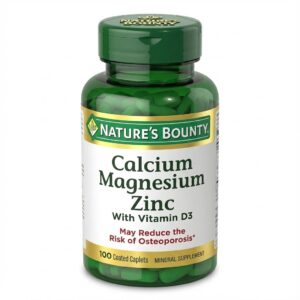
Nature’s Bounty Calcium Magnesium Zinc 100 Tablets is available at https://importedvitamins.com/shop with Cash on Delivery across Pakistan. Rather than requiring three separate supplements, a single tablet delivers all three minerals in one formulation, which simplifies the daily routine and ensures the minerals are taken in consistent combination.
Each serving provides Calcium 1000mg, Magnesium 400mg, and Zinc 25mg, ratios that reflect established nutritional guidelines and the interaction between these minerals. The 2:1 calcium-to-magnesium ratio is particularly well considered, as magnesium is needed to support calcium absorption and utilization. In contrast, many local brands offer calcium alone or in smaller combination packs, and the ratio between minerals is not always formulated with the same care.
| Feature | Nature’s Bounty Cal-Mag-Zinc | Typical Local Brand Approach |
| Minerals covered | Calcium + Magnesium + Zinc | Usually calcium alone, or calcium + D3 |
| Calcium per serving | 1000mg | Typically 500–600mg |
| Magnesium included | 400mg (proper ratio) | Rarely included |
| Zinc included | 25mg | Rarely included |
| Pack size | 100 tablets (~33 days) | Usually 30–60 tablets |
| Manufacturing standard | FDA-regulated, USA | DRAP, Pakistan |
| Price (Rs.) | 4,766 | Varies |
| Per day cost | ~Rs. 144 | Appears lower, but covers fewer minerals |
Manufactured in FDA-regulated facilities in the United States since 1971, every batch of Nature’s Bounty Calcium Magnesium Zinc is laboratory tested for purity and potency. Consequently, what is stated on the label is what each tablet actually delivers, a level of consistency that is not always guaranteed by the regulatory frameworks that govern local supplement manufacturing.
How to Take It for Best Results
To get the most from a calcium, magnesium, and zinc supplement, a few practical points are worth keeping in mind:
- Take with food: All three minerals absorb more efficiently when taken with a meal. Additionally, taking the supplement with food reduces the chance of any mild gastrointestinal discomfort.
- Separate from iron: Calcium, magnesium, and zinc all compete with iron for absorption. If you are also taking an iron supplement, take the two at least two hours apart to avoid interference.
- Split the dose if possible: Because absorption efficiency decreases with larger single doses, taking the supplement in two sittings, morning and evening, can improve overall uptake.
- Be consistent: Mineral status improves gradually, not overnight. Most people begin to notice meaningful changes in energy, sleep, and muscle comfort after four to eight weeks of consistent daily use. Missing days regularly undermines that process.
- Stay hydrated: Adequate water intake supports kidney function and ensures that minerals are properly processed and distributed by the body.
Frequently Asked Questions
Is a combined supplement as effective as taking each mineral separately?
For most people, yes, and in some ways more so. Because these minerals interact with each other’s absorption, taking them together in appropriate ratios is more effective than taking them at separate times without coordinating the amounts. The exception would be someone with a specific, severe deficiency in a single mineral, in which a higher therapeutic dose may be required under medical guidance.
Can too much calcium, magnesium, or zinc cause problems?
At supplemental doses within recommended ranges, all three are well tolerated by most people. Excessive calcium intake, above 2,500mg daily from all sources, has been associated with kidney stones in some individuals. Too much zinc over a long period can interfere with copper absorption. Following the recommended dosage on the label keeps intake within safe ranges for the vast majority of people.
How long does it take to notice a difference?
Energy levels and sleep quality often improve within two to four weeks. Muscle cramps and physical discomfort typically reduce within three to six weeks. Immune function improvements, fewer and shorter illnesses, are generally noticeable after six to eight weeks of consistent use. Bone density changes take considerably longer and require sustained supplementation alongside adequate Vitamin D.
Is this supplement appropriate for men as well as women?
Absolutely. While women face particular vulnerability to calcium and zinc deficiency during pregnancy and menopause, all three minerals are equally essential for men. In men specifically, zinc plays an important role in testosterone regulation and prostate health, making adequate zinc intake relevant across all adult age groups.
The Bottom Line
Calcium, magnesium, and zinc are three of the most widely deficient minerals in Pakistan, and they happen to work together in ways that make addressing them as a group considerably more effective than treating each in isolation. Whether the concern is bone health, sleep quality, immune function, muscle recovery, or hormonal balance, all three minerals play interconnected roles that a single well-formulated supplement can support consistently.
Nature’s Bounty Calcium Magnesium Zinc delivers all three in evidence-based ratios, manufactured to FDA standards, and available at https://importedvitamins.com/ with Cash on Delivery and free shipping across Pakistan. One product, three essential minerals, one consistent daily habit, that’s the practical simplicity that makes long-term supplementation actually sustainable.